
The Stories Behind Our Hopperz

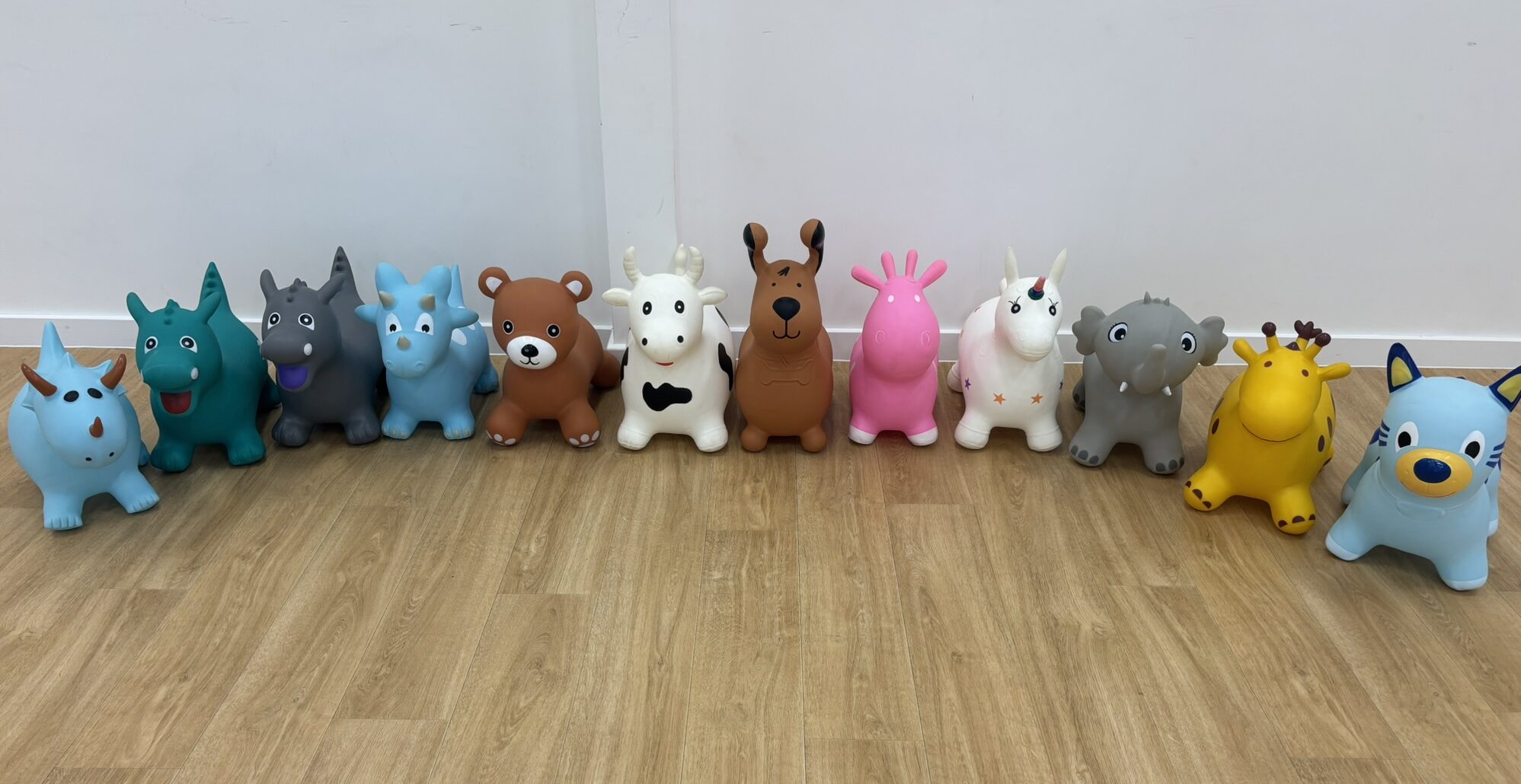
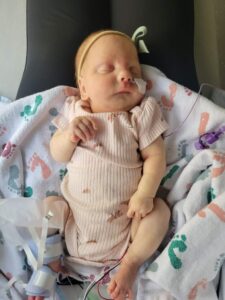
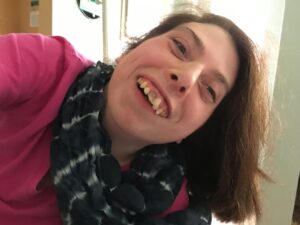
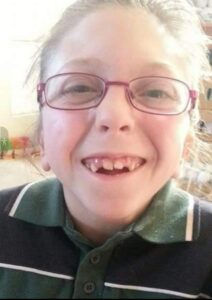
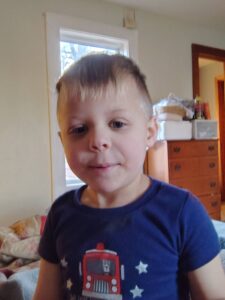
Each hopper at Poppy’s Play Patch is named after a child connected to Smith Lemli Opitz Syndrome (SLOS).


This project was created to honour their stories.

It’s not only Poppy’s story, but the many children and families who live with SLOS every day.


We are incredibly thankful to the families who have trusted us to share their children’s journeys. By bringing these stories into our play spaces, we hope to raise awareness, celebrate every child’s individuality, and help more people understand this rare condition.

Zopher

Hopper 
Named in honour of child name

Shelby

Hopper 
Named in honour of child name

Piper

Hopper 
Named in honour of child name

Cody

Hopper 
Named in honour of child name

Olivia

Hopper 
Named in honour of child name

Julie

Hopper 
Named in honour of child name

Jorja

Hopper 
Named in honour of child name

Gabriel

Hopper 
Named in honour of child name

Delilah

Hopper 
Named in honour of child name

Elsie

Hopper 
Named in honour of child name

Edgar

Hopper 
Named in honour of child name

Charlie

Hopper 
Named in honour of child name

Bryan

Hopper 
Named in honour of child name

💛 Read Their Stories 💛

Zopher 

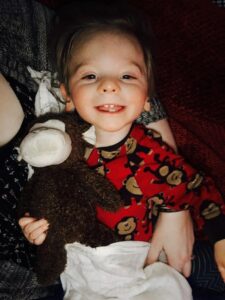
Zopher was a cheeky 2 1/2 year old when he died. He was born with a spark of magic in his eyes and a mischievous smile that spread joy throughout the world. He taught is what love, strength, and bravery are and we are the luckiest parents in the world to have been lucky enough to call him ours.

In August 2017, we traveled to Colorado Children’s Hospital to take part in a clinical trial. Our last day there, he came down with what seemed to be a typical stomach bug. From that point on, he deteriorated rapidly. By his birthday, Oct 6, he required a PICC line for nutrition. Even 5 mL of meds via g-tube caused excruciating pain. In early November he seemed to turn a corner and we were in talks with his Seattle Children’s team about removing the PICC line. We were able to bring him home and he was improving steadily. That lasted about two weeks and he spiraled back to severe pain for seemingly no reason. By mid January, our options were to induce a medical coma and continue searching for answers, or to transition to hospice. When my husband and I really stopped to listen to what he needed and wanted instead of what we wanted, it was clear that he’d been telling us for at least two months that he was done fighting. We chose hospice and took him home Jan 31. He died in his safe place, my husband’s arms, on Feb 6.

Olivia’s parents discovered Olivia’s diagnosis of Smith Lemli Opitz the day before she was scheduled for delivery. Without knowing the full scope of what that meant, she was delivered at a level 3 NICU. Within 24 hrs she began to code and was lifeflighted to Seattle Childrens hospital, a level 4 NICU of the near best reputation in the US. Olivia, or Livvy, as we called her was mostly deaf, born with cataracts and couldnt see, she had syndactyly of the toes and an extra pinky finger on each hand. She was medically complicated as she also had a severely recessed jaw and tongue which required a feeding tube, and she had several complications with her heart as well as Atrial Septal Defect. Seattle Children’s biochemical genetics team worked very closely with Olivia and helped our family as we learned more about her diagnosis. She had one of the rarest and least survivable variant of SLOS. She was given 3-6 months to live. She was in Seattle Childrens for 5 weeks and came home to so many loved ones just waiting to meet her. She lived the next 7 weeks growing, receiving so many snuggles and knowing nothing but absolute love. She had a very sweet temperament and never cried. She’d often smile and make sweet little kissy faces. We lost our little girl to sudden heart failure at 1 day shy of 3 months old on November 28th, 2024. She had many nicknames: Livvy Loo, nugget, or Liv. Of the gifts she received in her life, most were animals and purple seemed to always surround her.

Olivia

Julie

Julie was born May 19,1987 Weighed 6 lbs 4 ounces was 18 inches long Right away she was whisked off from the deliverey room. They could see multipled things were wrong. She was airlifted to our children’s hospital in Nova Scotia. At ten days old, she has her first surgery. Over the next 17 years, she endured over 30 surgeries. Julie was diagnosed with the sybdrome at 9 months old. Remember back then, no cause for the syndromeand no internet. We were quite isolated! Didn’t know any other families. We did find an article in a magazine looking for other families. We were such a small group writing each other. In 1993, Julie was almost 6 when they asked us tocheck her cholesterol level. Within 3 weeks they informed us the cause. Two years later, our first medical conference. To say it was overwhelmingto see 34 kids looking the same, reacting to the same noises was incredible. That was 1995. We placed Julie in a home in 2004. Taking care of her 24/7 for 17 years was too much. We had her at least one weekend per month and holidays and summer vacation. Julie was total care. Tube fed her whole life. The first to get a button in Atlantic Canada. She also had a colostomy herwhole life She was not verbal but had some signs she would do for certain things. Even with her intellectual disability, Julie understood French, which is our language but also understood Englishas most of her caregivers were English. Julie thrived throught her life. Always happy. Whenever she wasn’t, we took her to the doctor because something was off. 11 months ago on March 3rd,she wasn’t admittedwith pneumonia, as soon as her caregiver called me, I rushed to my place of work, the hospital. As soon as I saw her, Iknew this was it. We were told 3-5 years. She was 2 months shy of 38. She died in my arms after I told her it was ok to go. Kissed her, said I love you. And she just left. March 10th, 2025

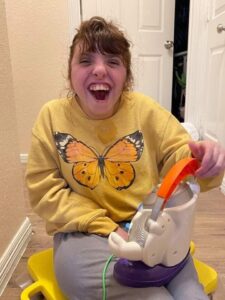
Our daughter Jorja was almost 11 years old when she died. She was such a massive part of our family, so loving and lovable! She was loud, fast, and full of energy all the time, even sometimes in the middle of the night! She may have had many disabilities and trials through her life but she always came back with a winning grin! We miss our cheeky ratbag every single day!

Jorja

Gabriel

My SLOS boy Gabriel is now 4 and my sbs boy Abel is 2. Our story began with Gabriel being born small, based on ultrasound. Then discovering syndactyly and cordee at birth which they did some genetic tests and they came back normal. Fast forward to him being a year and a half. We discovered a lump on his collar bone and took him in to get it investigated. They found on x-ray 14 fractures at different stages of healing. We ended up doing more genetics testing with my husband’s and my DNA as well as Gabriel. Those tests came back with SLOS results. The doctor wrote off those fractures as SLOS and discussed high calorie and cholesterol diets. That was January 2023. Abel was born June 2023 was tested at birth for SLOS and came back negative not even a carrier. Both attended the same licensed daycare since birth. February 2024 at 7 months old I received a call that Abel quit breathing at daycare and to get to the emergency room. When I arrived Abel was crying. But he sounded weak. He got CPR and brain scans and they determined he was likely shaken at that time and we were sent to children’s hospital by helicopter. Once there and many scans and X-rays later they found him to have subdermalhemotma(brain bleed) hemerages in his brain and eyes and multiple bone fractures as well. And then my questions all came to light with Gabriel. Different genetic lady said he was in fact abused as well. As fractures are not common in SLOS. Gabriel at time Abel was in children’s we had him looked over again too. More fractures in his feet this time. Still can’t wrap my head around how someone could do these things to children. Gabriel today is a healthy growing 4 year old with no problems other than being a smaller boy. Abel ended up with CP which we are thankful he is doing as well as he is daily. He struggles with right side weakness and has a right leg brace to assist him with walking. And bi weekly PT. They are both such strong resilient boys

Edgar’s Story — A Life That Defied the Odds When Edgar was born, we were given a list of things he would likely never do. Doctors explained that because of Smith–Lemli–Opitz syndrome (SLOS), his life would be filled with profound challenges. We were told, very gently but very clearly, that he might not live past his first year of life. They also told us he would likely never eat or drink by mouth, that a feeding tube would be his lifelong source of nourishment. Those predictions were spoken with care, but Edgar had a story of his own to write. Today, Edgar is 20 years old. And every single day, he continues to prove that life is not defined by what we are told is impossible. Edgar wakes each morning with a zest for the day that is impossible to miss. His laughter fills the room. His joy is contagious. He simply loves living. One of the greatest surprises along the way has been his relationship with food. The little boy we were told would never eat now enjoys 1–2 pounds of fruits and vegetables every day, living what we lovingly call a Nutritarian lifestyle full of colorful plant foods. He also loves swimming, feeling the freedom of movement in the water. When he’s not swimming, you’ll often find him on gait-training walks outside in nature, soaking up the fresh air and the beauty of the world around him. Edgar’s life has not been without challenges. He lives with scoliosis and hip dysplasia, and he has endured several surgeries—including one that nearly took his life. But Edgar is a fighter. Not a fighter fueled by anger or struggle, but by something much stronger: love and joy. Even on difficult days, he never gives up. His spirit reminds us daily that progress doesn’t always come in giant leaps. Sometimes it comes through small, steady steps forward—steps taken with courage, patience, and hope. Edgar’s story is a story of triumph. Triumph over predictions. Triumph over limitations. Triumph over the idea that a diagnosis determines the depth of a life. Most of all, it is a story about the extraordinary beauty of a human being who wakes up every day ready to experience the world with laughter, resilience, and heart. At 20 years old, Edgar is still teaching us what it truly means to live. And we are so grateful to share his story so others can see that children and adults with SLOS are far more than a diagnosis. They are joy. They are strength. They are possibility. And Edgar is living proof that sometimes the most powerful lives are the ones that quietly, persistently defy every expectation. 💛

Edgar

Delilah

Delilah Rose Hernandez

My special baby girl was born on July 23, 2021. I found out about her diagnosis after birth. I was unaware that she was sick in utero with Smith Lemli Opitz Syndrome. Delilah was on the severe side of SLO, mostly affecting her organs.

She had Hirschsprung’s disease diagnosed after birth in the NICU, where she endured a life-saving surgery to have an ileostomy placed. She then had a Broviac for TPN and lipid infusion, along with a G-tube for feeds.

We didn’t know anything about her syndrome, let alone how severe this condition can be. I was scared and only prayed that my baby would come home and be okay. I dedicated my life to her, learning and training in the hospital so I could finally bring her home after four months in the NICU.

Every couple of months she had hospital visits or new diagnoses. It was hard, but my Delilah was a warrior. She is a hero to many. She touched hearts all around the world.

When she passed, it felt like a dark cloud came over us and the world stopped for a moment. I have never met anyone as strong as my baby, who fought so hard to be here. She was delicate and precious — we called her our delicate Delilah.

My life will never be the same without her. I lost my baby girl at 2 years old on October 15, 2023 — a day that will forever leave me brokenhearted.

Strangely, that day is also considered Pregnancy and Infant Loss Remembrance Day. For some reason, that gives me some sort of peace. God took her on that day — Delilah’s Day.

She is forever in my heart, and in the hearts of all who love her.

Until we meet again 🙏🏼

Our beautiful boy, Charlie Paul Kelly was born on 29th November 2024 in Scotland. When he arrived, we really did think we had a healthy little baby. As the days went on, we started to realise that things weren’t quite as we expected, and that Charlie’s journey was going to look different. At six weeks old, Charlie was diagnosed with Smith-Lemli-Opitz Syndrome. We had never heard of it before he was diagnosed and it completely turned our world upside down. But what never changed was how much we loved him. From the very beginning, we were so proud to be Charlie’s mummy and daddy. Charlie spent 97 days in NICU. Those days were tough. There was a lot of fear and uncertainty, but there was also so much love. He showed us every day how strong he was. For such a tiny baby, he was unbelievably brave. He fought so hard, and we will always be in awe of him. We were then given 18 precious days at Robin House Children’s Hospice. Those days mean everything to us. We got to hold him without all the noise and wires, to just sit with him, talk to him, cuddle him and be his mummy and daddy. We made memories in those days that we will carry with us for the rest of our lives. Charlie is our sunshine boy ☀️ Even on the darkest days, he brought light into our lives in a way only he could. Yellow feels just like him – bright, beautiful and full of warmth, which is why choosing the yellow hopper felt so right for our boy. Mummy & Daddy love you forever and always our special boy 💛✨

Charlie

Cody

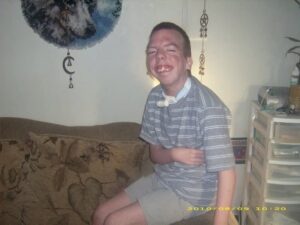
Cody was born May 16 of 1995 He was a very sick little boy and wasn’t given much chance. Almost at birth he was diagnosed with Smith Lemli Opitz syndrome. Thankfully, the geneticist they called in, had recently diagnosed another child with a Syndrome so he recognize some of the classic characteristics. Cody’s birth parents placed him up for adoption as they didn’t feel they could care for him as he continued to live. Fast forward to us. We adopted Cody. when he was 2 1/2 years old. He already had a feeding tube and colostomy, but was fairly healthy and had baby getting PT and OT and speech. CODY was never able to walk on his own or speak. But he certainly could love. He lived to be 22 and passed away very suddenly as a result of a bowel obstruction. He loved being in a swimming pool and clapping your hands. He loved fireworks, music, and his family. We were blessed to be a part of his story and miss him every day. He taught our whole family so much about unconditional love

Bryan was 18 years old. His birthday was 02/10/1996. He was nonverbal and did not walk but was such a joy to be around. He was very loving and always had a smile He loved Teletubbies and Barney! He did have a tracheotomy and a feeding tube. But that did not slow him down He was always on the go. At the time of his birth we were told he would only live to be 3 to 6 months old, oh boy did we show them doctors!! He passed away on 4/ 14 /2024

Bryan

Piper

Piper’s life story is not anything like I dreamed of or expected for my daughter when I used to daydream during pregnancy; it is more exceptional than I ever thought. Piper arrived with a bit of drama, having flipped herself into a breech position while I was in labor with an epidural. I can laugh about it now, but determining that she had turned when my water broke and the hospital staff suddenly turning into a NASCAR pit crew in order to prep us for an emergency c-section was scary at the time. Arriving a couple of minutes afer one am, after checking APGARs, we learned Piper had a host of congenital anomalies (soft palate cleft, extra finger, fused toes, heart murmur, kidney issues, to name a few) that would dictate an extended stay at the hospital, followed by months in and out of doctor’s offices and Texas Children’s Hospital, before we received her genetic syndrome diagnosis. We had been researching all of her symptoms, trying to figure out the cause of all of her anomalies, and her genetics doctor looked at her and said he knew what she had – he needed a blood test to prove it. And he was right. Piper has a recessive genetic disorder called Smith Lemli Opitz Syndrome, or SLOS. Having been discovered in the mid 1960’s but determined to be a metabolic disorder thirty years later, Piper was the earliest diagnosed patient at two and a half months at the time of her diagnosis. Many of her doctors didn’t expect her to live very long. In fact, our attending physician told us to make her as comfortable as possible in the time she was here, expecting her to pass within weeks of being born. Her story started as one of hospitalizations and medical procedures, and we became honorary 4th year medical students, learning things like how to use guaiac to test for blood, the difference between an MRI and an MRA, how to calculate TPN and what those letters stood for, and what the corpus callosum really does in your brain. At six months, Piper flew to Portland, Oregon, to participate in a research study about her syndrome and possibly join the statin study. She was declined and we were told she would be lucky to make it to her first birthday. But they didn’t count on Piper’s joy of life nor her family’s stubbornness in getting her what she needed. Her first birthday party was a huge bash with inviting family and friends and people who had cared for her in some capacity that year, whether it was a therapist through ECI or one of the home health nurses who made many trips to check her weight. Milestones came slowly, but they came. Piper loved looking at the baby in the mirror, hearing her grammy sing songs, cuddling next to daddy and pappy and watching tv, or playing “peek”(a-boo) with mom. She was our sunshine and our happy snuggler. Every new skill, from holding her head up during tummy time to rolling over were hard won with months of practice and support. She and her baby sister sat up solo at the same time- Piper was two and a half and her sister was 6 months. Fast forward three years to Piper starting school in the ECSE-Early Childhood Special Education Program. Her story now involved making sure the teachers and aides saw Piper and what she could do, not the limitations of her wheelchair or her ID diagnosis. As she’s grown older, it’s been important for Piper to be seen as a person by those around her at school, the medical world, and the community, and for people to see her potential, even though learning and progress might not come at the rate we hoped…but that it did come. Piper has had multiple surgeries for multiple reasons – mainly orthopedic for hands and feet – and a multitude of procedures from CT scans and casting for splints and AFOs. While medical things have been a big part of her life, it hasn’t been all of it. Piper has had “boyfriends” at school, loves a particular boy band, expresses strong preferences in colors and clothing, wore Texas sized homecoming mums on her wheelchair, and has had friendships that have spanned her school years – just like a “normal” or neurotypical girl. She also wants “her” music on in the car and she steals the remote control to change the television – she just needs help with the fine motor coordination to do it. She’s been baptized and she exudes happiness and love – except when she’s tired, cranky, or sick. She’s participated in drug trials and been on panels addressing medical students on how to interact with special needs patients, had her story told to the Harris County Board of Education and appears in mandatory training for her school district staff about Cultural Compentency. We’ve met several of her SLO “siblings” and have gone to celebrations that were designed to showcase her specialness and differences. Piper was the first student across the stage at her graduation when she was 18, and now that she’s about to exit the school system at age 22, we know that she will continue to impact people around her as her life adventure continues to unfold, bringing that happy ray of sunshine smile to more people.